
What is XLR, RCA, TRS, 3.5mm, 6.35mm? A Quick Guide for Audio Interfaces
December ,18 ,2025
Audio connectors are key for audio signal transmission, with their performance and compatibility directly impacting signal fidelity and stability. RCA, 3.5mm, TRS, TRRS, TS, and XLR are the most common interfaces across professional audio, consumer electronics, and stage performances. This article simplifies their core info including definitions, key parameters, and typical uses to guide equipment selection and system setup.
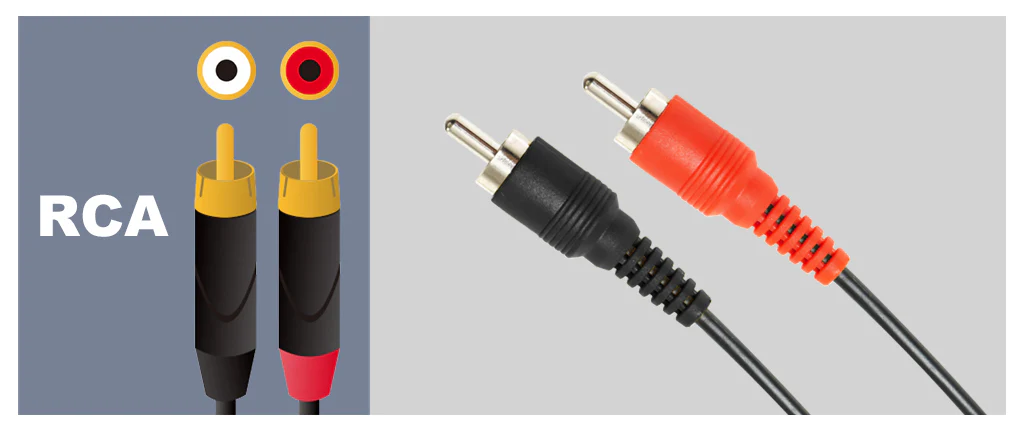
Also known as phono connector, RCA gets its name from the Radio Corporation of America. It’s an analog audio/video connector with coaxial transmission and unbalanced design, using red/white for audio channels and yellow for video. Most RCA connectors handle analog audio; digital use is rare. Unbalanced transmission makes it prone to interference over long distances, but it’s easy to plug and unplug.
• Impedance: 50Ω-75Ω (around 60Ω for audio use), fitting home audio needs.
• Frequency response: 20Hz-20kHz (standard), covering human audible range.
• Transmission: Low-power signal only, unsuitable for amplified power output.
RCA is standard for home audio-visual systems, used in CD/DVD players, set-top boxes, and amplifiers. It also connects audio sources to preamps in entry-level Hi-Fi setups and works for car audio signal transmission.
The 3.5mm (mini stereo jack) is a compact connector, common in 3-pole (TRS) and 4-pole (TRRS) types. It’s ideal for portable devices, mainly using unbalanced transmission (rare professional balanced versions exist). It handles analog audio; digital output is limited to some high-end devices. TRRS supports both audio and microphone signals.
• Impedance: 16Ω-32Ω (portable devices), 600Ω (professional balanced versions).
• Frequency response: 20Hz-20kHz (standard), up to 10Hz-40kHz for high-quality models.
• Rated power: ≤1W, matching portable device output.
It’s the core audio interface for smartphones, tablets, laptops, headphones, and portable speakers. 3-pole versions handle stereo audio, while 4-pole TRRS works with headphones with microphones. It’s also used in small mixers and portable recorders.
TS (Tip-Sleeve) is a mono audio connector with unbalanced transmission, suitable for short distances. Common specs are 6.35mm (1/4 inch, professional use) and 3.5mm (portable devices). It only supports analog audio, no digital function, and is prone to interference.
• Impedance: 600Ω, fitting professional mono devices like electric guitars and dynamic microphones.
• Frequency response: 20Hz-20kHz, meeting basic mono transmission needs.
• Rated power: ≤2W, for low-level mono signals only.
6.35mm TS is widely used in professional audio (electric guitars, basses, dynamic microphones, mixers). 3.5mm versions are found in old radios and some portable recorders. It’s also used in industrial audio monitoring systems.

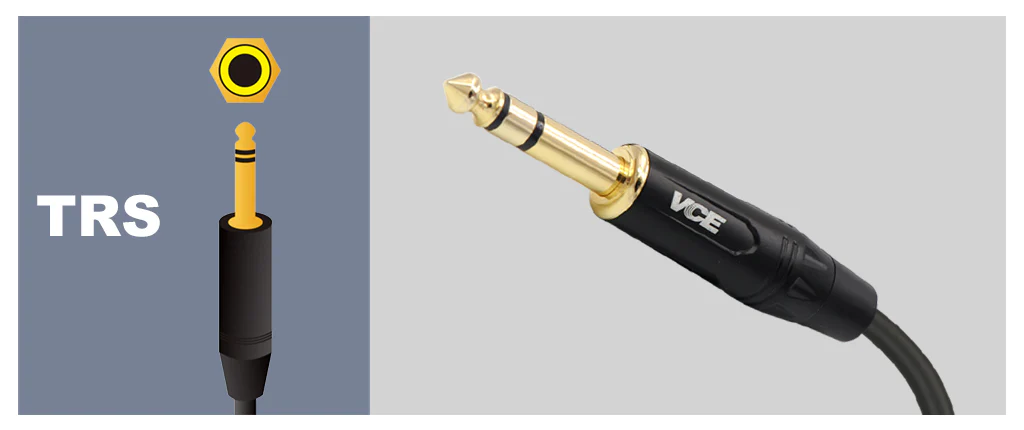
TRS (Tip-Ring-Sleeve) supports both balanced and stereo transmission. In stereo mode, it uses unbalanced transmission for left/right channels. In balanced mode, it reduces interference via differential amplification. Common specs are 6.35mm (professional) and 3.5mm (portable). It only handles analog audio.
• Impedance: 600Ω (balanced mode), 16Ω-32Ω/600Ω (stereo mode, depending on spec).
• Frequency response: 10Hz-100kHz (balanced), 20Hz-20kHz (stereo).
• Rated power: ≤5W, supporting higher signal levels for professional use.
6.35mm TRS is used for balanced transmission between mixers, amplifiers, and audio processors. It also connects stereo headphones/speakers. 3.5mm versions work with laptops and small mixers. Some condenser microphones use it to connect to phantom power.
TRRS (Tip-Ring-Ring-Sleeve) is a 4-pole connector that combines stereo audio, microphone, and control signals. It has CTIA and OMTP standards (incompatible without adapters). Common spec is 3.5mm; 2.5mm is used in high-end balanced setups. It mainly handles analog composite transmission; digital use is rare. Most are unbalanced, with few balanced 2.5mm versions.
• Impedance: 16Ω-32Ω (portable), 600Ω (2.5mm balanced).
• Frequency response: 20Hz-20kHz (standard), 10Hz-40kHz for high-quality models.
• Rated power: ≤1W, suitable for portable device composite signals.
It’s key for portable devices like smartphones and tablets, enabling headphone audio, calls, and line control. It’s also used in portable recorders (for external microphones) and video conferencing equipment. High-end phones use 2.5mm TRRS for balanced audio playback.
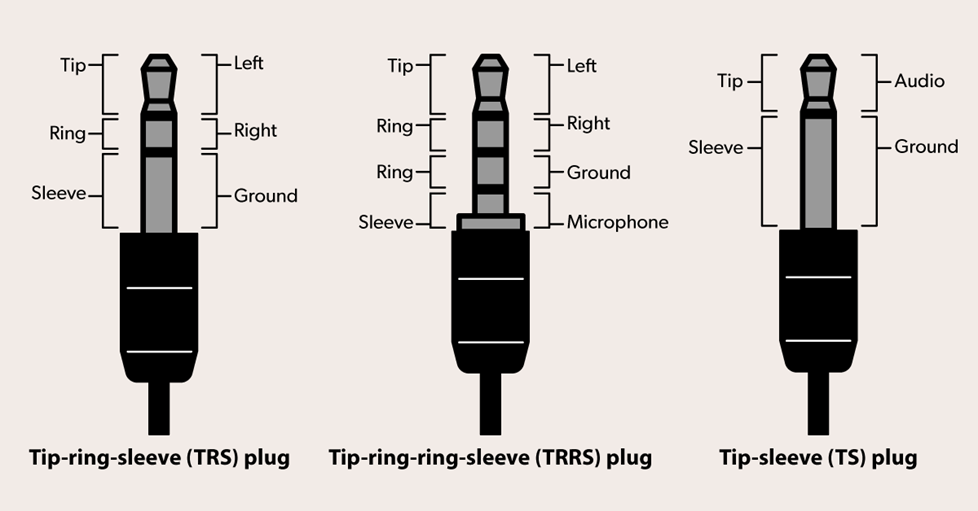
Briefly, the core differences between TS, TRS and TRRS lie in their pole counts and functions. TS (2-pole: Tip-Sleeve) only supports mono analog audio with unbalanced transmission, suitable for simple single-channel devices. TRS (3-pole: Tip-Ring-Sleeve) is versatile, working for stereo audio (unbalanced) or balanced signal transmission to reduce interference in professional setups. TRRS (4-pole: Tip-Ring-Ring-Sleeve) adds microphone and control signals to stereo audio, mainly designed for portable devices needing multi-function audio use.
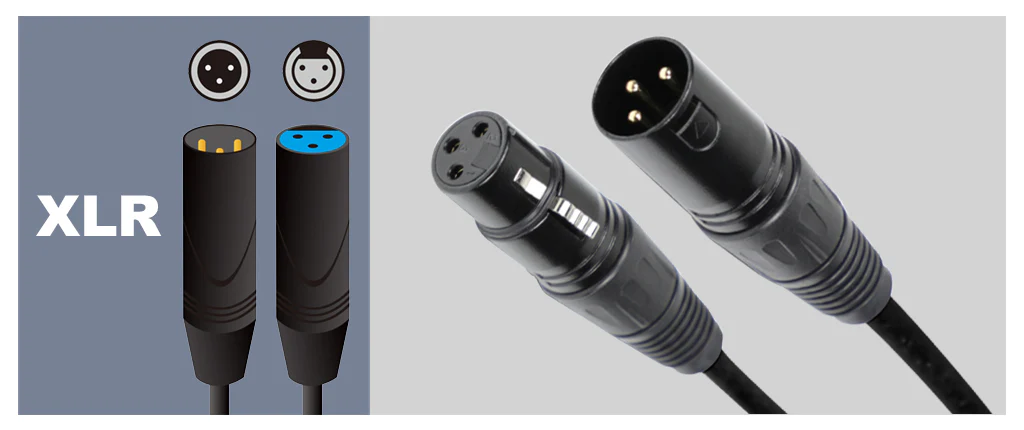
XLR (Cannon connector) is a professional balanced connector, mostly 3-pole (multi-pole for special use). It has a locking design to prevent signal loss and uses differential transmission for strong anti-interference, ideal for long-distance high-fidelity audio. It mainly handles analog audio; digital use is limited to some multi-pole specs. All versions support balanced transmission.
• Impedance: 600Ω, compatible with most professional microphones and audio equipment.
• Frequency response: 10Hz-100kHz, extending to 5Hz-200kHz for high-end models.
• Rated power: ≤10W, supporting high-level balanced signal transmission.
XLR is standard in recording studios, stage performances, and broadcast systems. It connects microphones to mixers/audio interfaces and links professional equipment (amplifiers, equalizers) for stable long-distance transmission. High-end Hi-Fi equipment also uses it for better audio quality.
Each interface has unique strengths: RCA for cost-effective home audio; 3.5mm for versatile portable use; TS for simple mono transmission; TRS for dual stereo/balanced needs; TRRS for portable composite signals; XLR for professional anti-interference transmission.
Choose based on your scenario: RCA for home systems; 3.5mm/TRRS for portables; TS for mono devices; TRS/XLR for professional balanced transmission; XLR for long-distance high-fidelity needs. Scientific selection ensures optimal equipment performance.
What is RCA Connector
1. Interface Introduction
Also known as phono connector, RCA gets its name from the Radio Corporation of America. It’s an analog audio/video connector with coaxial transmission and unbalanced design, using red/white for audio channels and yellow for video. Most RCA connectors handle analog audio; digital use is rare. Unbalanced transmission makes it prone to interference over long distances, but it’s easy to plug and unplug.
2. Core Parameters
• Impedance: 50Ω-75Ω (around 60Ω for audio use), fitting home audio needs.
• Frequency response: 20Hz-20kHz (standard), covering human audible range.
• Transmission: Low-power signal only, unsuitable for amplified power output.
3. Typical Applications
RCA is standard for home audio-visual systems, used in CD/DVD players, set-top boxes, and amplifiers. It also connects audio sources to preamps in entry-level Hi-Fi setups and works for car audio signal transmission.
What is 3.5mm Connector?
1. Interface Introduction
The 3.5mm (mini stereo jack) is a compact connector, common in 3-pole (TRS) and 4-pole (TRRS) types. It’s ideal for portable devices, mainly using unbalanced transmission (rare professional balanced versions exist). It handles analog audio; digital output is limited to some high-end devices. TRRS supports both audio and microphone signals.
2. Core Parameters
• Impedance: 16Ω-32Ω (portable devices), 600Ω (professional balanced versions).
• Frequency response: 20Hz-20kHz (standard), up to 10Hz-40kHz for high-quality models.
• Rated power: ≤1W, matching portable device output.
3. Typical Applications
It’s the core audio interface for smartphones, tablets, laptops, headphones, and portable speakers. 3-pole versions handle stereo audio, while 4-pole TRRS works with headphones with microphones. It’s also used in small mixers and portable recorders.
What is TS Connector?
1. Interface Introduction
TS (Tip-Sleeve) is a mono audio connector with unbalanced transmission, suitable for short distances. Common specs are 6.35mm (1/4 inch, professional use) and 3.5mm (portable devices). It only supports analog audio, no digital function, and is prone to interference.
2. Core Parameters
• Impedance: 600Ω, fitting professional mono devices like electric guitars and dynamic microphones.
• Frequency response: 20Hz-20kHz, meeting basic mono transmission needs.
• Rated power: ≤2W, for low-level mono signals only.
3. Typical Applications
6.35mm TS is widely used in professional audio (electric guitars, basses, dynamic microphones, mixers). 3.5mm versions are found in old radios and some portable recorders. It’s also used in industrial audio monitoring systems.
What is TRS Connector?
1. Interface Introduction
TRS (Tip-Ring-Sleeve) supports both balanced and stereo transmission. In stereo mode, it uses unbalanced transmission for left/right channels. In balanced mode, it reduces interference via differential amplification. Common specs are 6.35mm (professional) and 3.5mm (portable). It only handles analog audio.
2. Core Parameters
• Impedance: 600Ω (balanced mode), 16Ω-32Ω/600Ω (stereo mode, depending on spec).
• Frequency response: 10Hz-100kHz (balanced), 20Hz-20kHz (stereo).
• Rated power: ≤5W, supporting higher signal levels for professional use.
3. Typical Applications
6.35mm TRS is used for balanced transmission between mixers, amplifiers, and audio processors. It also connects stereo headphones/speakers. 3.5mm versions work with laptops and small mixers. Some condenser microphones use it to connect to phantom power.
What is TRRS Connector?
1. Interface Introduction
TRRS (Tip-Ring-Ring-Sleeve) is a 4-pole connector that combines stereo audio, microphone, and control signals. It has CTIA and OMTP standards (incompatible without adapters). Common spec is 3.5mm; 2.5mm is used in high-end balanced setups. It mainly handles analog composite transmission; digital use is rare. Most are unbalanced, with few balanced 2.5mm versions.
2. Core Parameters
• Impedance: 16Ω-32Ω (portable), 600Ω (2.5mm balanced).
• Frequency response: 20Hz-20kHz (standard), 10Hz-40kHz for high-quality models.
• Rated power: ≤1W, suitable for portable device composite signals.
3. Typical Applications
It’s key for portable devices like smartphones and tablets, enabling headphone audio, calls, and line control. It’s also used in portable recorders (for external microphones) and video conferencing equipment. High-end phones use 2.5mm TRRS for balanced audio playback.
TS vs TRS vs TRRS
Briefly, the core differences between TS, TRS and TRRS lie in their pole counts and functions. TS (2-pole: Tip-Sleeve) only supports mono analog audio with unbalanced transmission, suitable for simple single-channel devices. TRS (3-pole: Tip-Ring-Sleeve) is versatile, working for stereo audio (unbalanced) or balanced signal transmission to reduce interference in professional setups. TRRS (4-pole: Tip-Ring-Ring-Sleeve) adds microphone and control signals to stereo audio, mainly designed for portable devices needing multi-function audio use.
What is XLR Connector?
1. Interface Introduction
XLR (Cannon connector) is a professional balanced connector, mostly 3-pole (multi-pole for special use). It has a locking design to prevent signal loss and uses differential transmission for strong anti-interference, ideal for long-distance high-fidelity audio. It mainly handles analog audio; digital use is limited to some multi-pole specs. All versions support balanced transmission.
2. Core Parameters
• Impedance: 600Ω, compatible with most professional microphones and audio equipment.
• Frequency response: 10Hz-100kHz, extending to 5Hz-200kHz for high-end models.
• Rated power: ≤10W, supporting high-level balanced signal transmission.
3. Typical Applications
XLR is standard in recording studios, stage performances, and broadcast systems. It connects microphones to mixers/audio interfaces and links professional equipment (amplifiers, equalizers) for stable long-distance transmission. High-end Hi-Fi equipment also uses it for better audio quality.
Each interface has unique strengths: RCA for cost-effective home audio; 3.5mm for versatile portable use; TS for simple mono transmission; TRS for dual stereo/balanced needs; TRRS for portable composite signals; XLR for professional anti-interference transmission.
Choose based on your scenario: RCA for home systems; 3.5mm/TRRS for portables; TS for mono devices; TRS/XLR for professional balanced transmission; XLR for long-distance high-fidelity needs. Scientific selection ensures optimal equipment performance.